
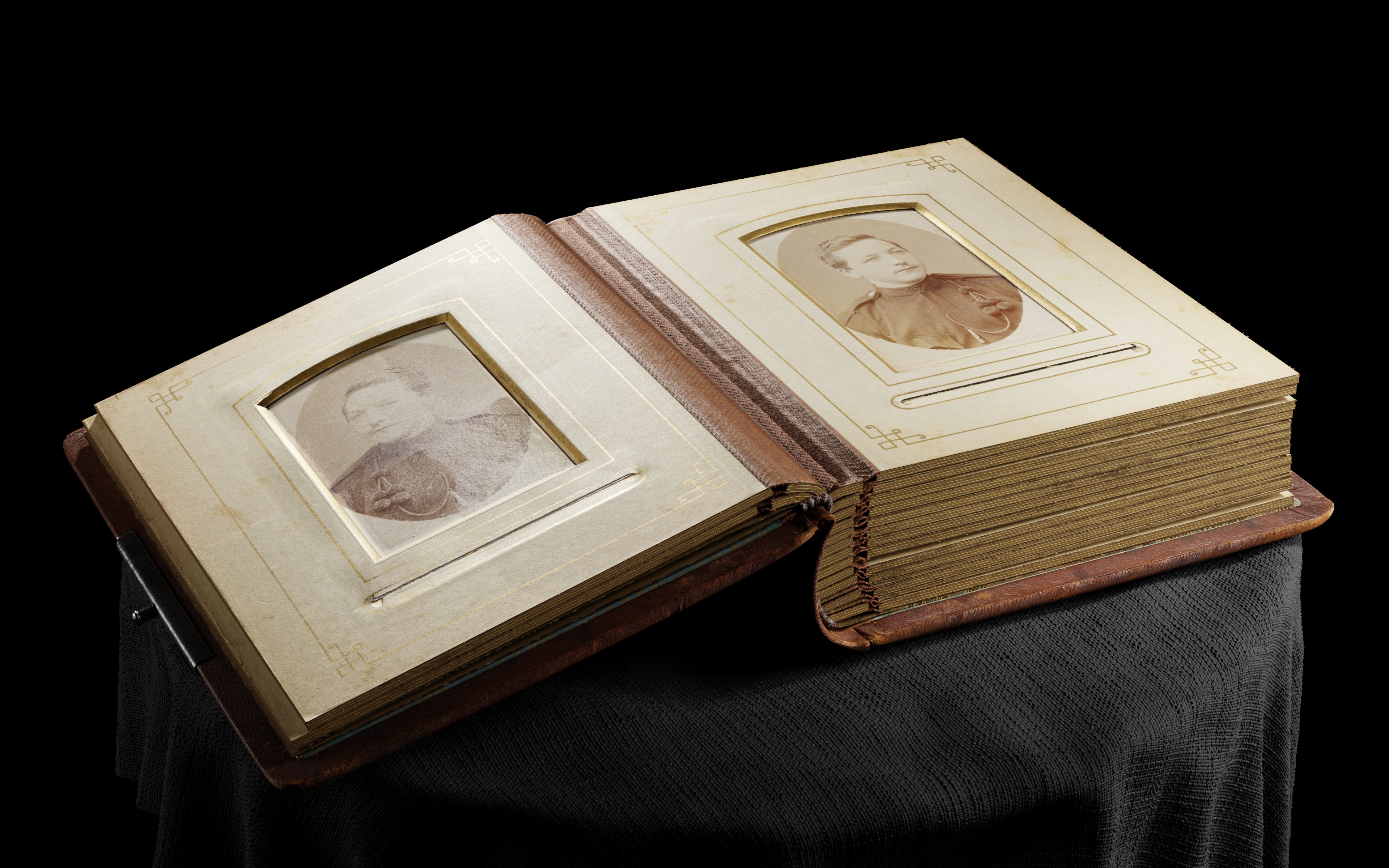
On this page, you can explore the pilot project we have prepared about the digitization of a highly-valuable artifacts.
Digitization at the highest possible quality is essential for historical artifacts, as it is not merely about showcasing a work, but about preserving it in a digital form with greater fidelity than traditional photography can achieve. By capturing these works in digital form with accuracy and fidelity, museums and private collectors can make them available to a wider audience, allowing scholars, art enthusiasts, and the general public to experience and study them in detail.
The pilot project described here has not only validated the technical workflow but also demonstrated how the historical artifacts could be faithfully reproduced in a digital environment, ensuring both long-term preservation and meaningful public engagement.
The 3D digitization process was divided into two main areas: PBR scanning (performed with the colormass Scanner) and photogrammetry for capturing the geometry, which was carried out using a custom setup (not operated by colormass).
Both the photogrammetry results and the cleaned, properly topologized maps were then uploaded to the CMS. From there, the designated 3D artist was able to perform a detailed quality review, ensuring both fidelity to the original object scan and compliance with the required topology standards.
Since the PBR scanner is directly integrated with the online 3D CMS, the final results were automatically uploaded as texture maps. This seamless connection ensured that the digitized materials were immediately available within the system, streamlining the workflow and reducing the need for manual file handling.

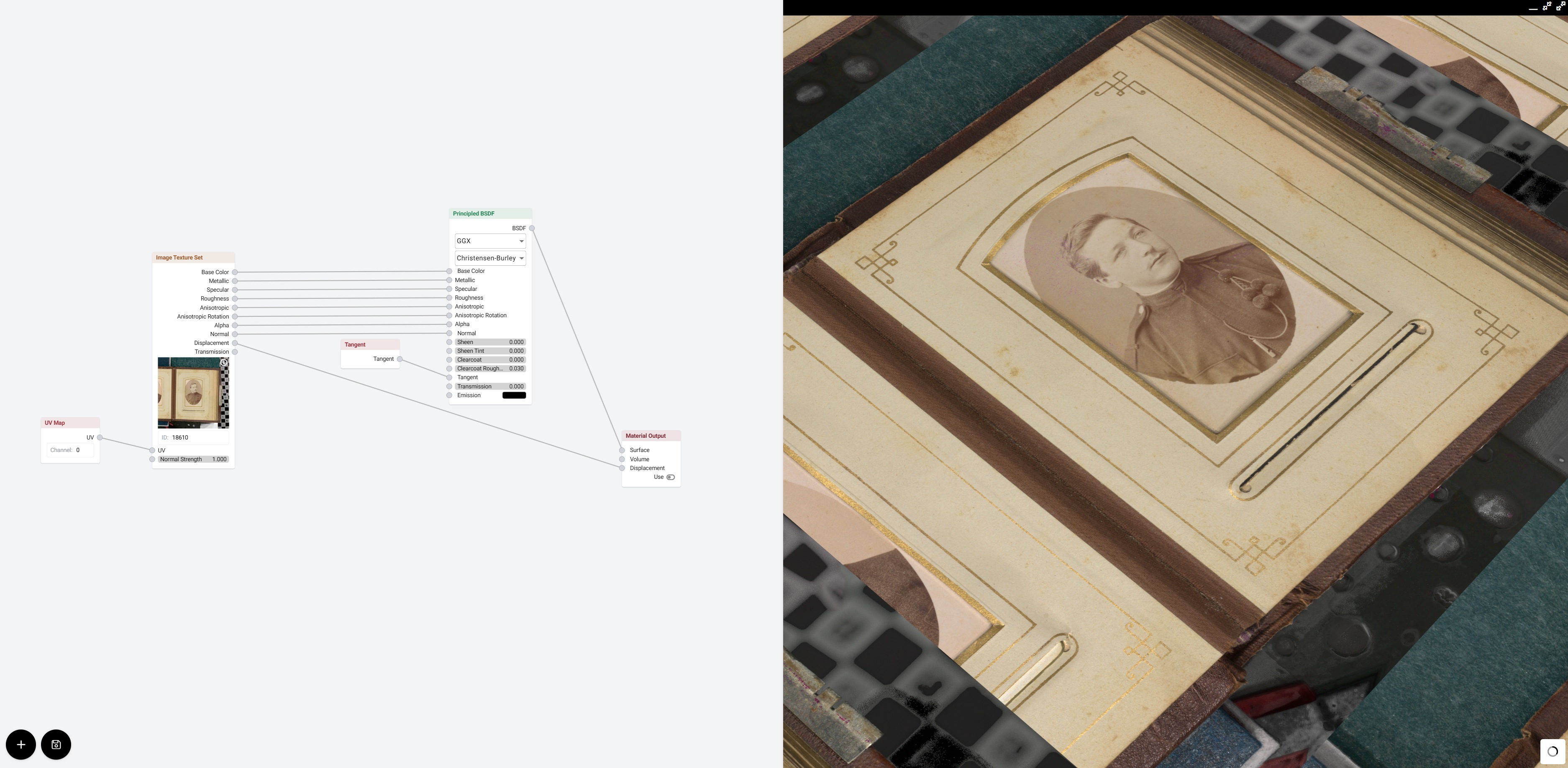
And from there, the team was able to process and edit the final materials directly within the platform, using the built-in online material node editor. This allowed for precise adjustments and fine-tuning without the need to leave the CMS environment, ensuring a smooth and efficient post-processing workflow.
From the uploaded 3D assets, a series of renders and videos were produced. All visuals were created entirely within the 3D pipeline (without the use of AI tools or external post-processing in Photoshop), so everything you see below are all 3D generated.
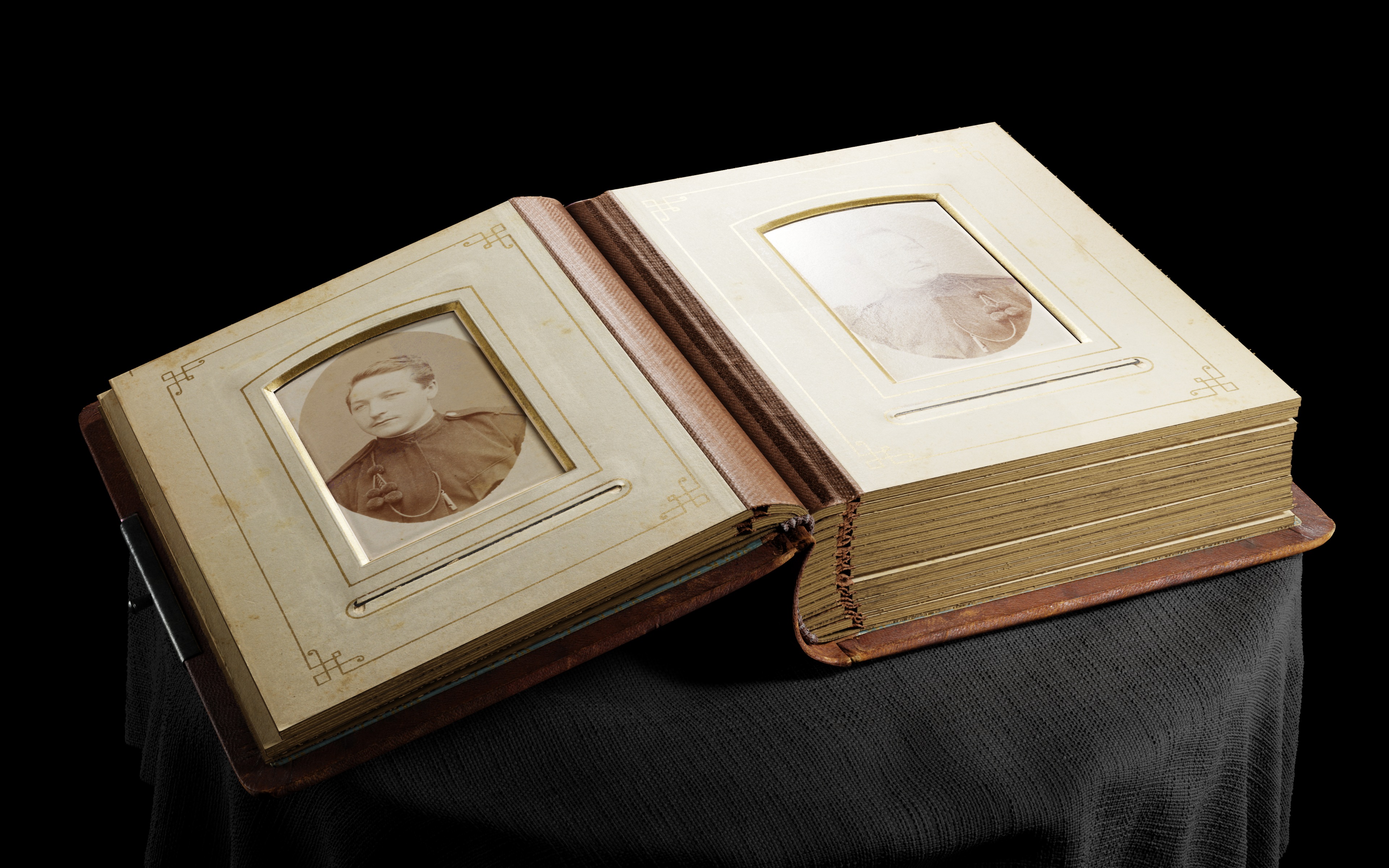
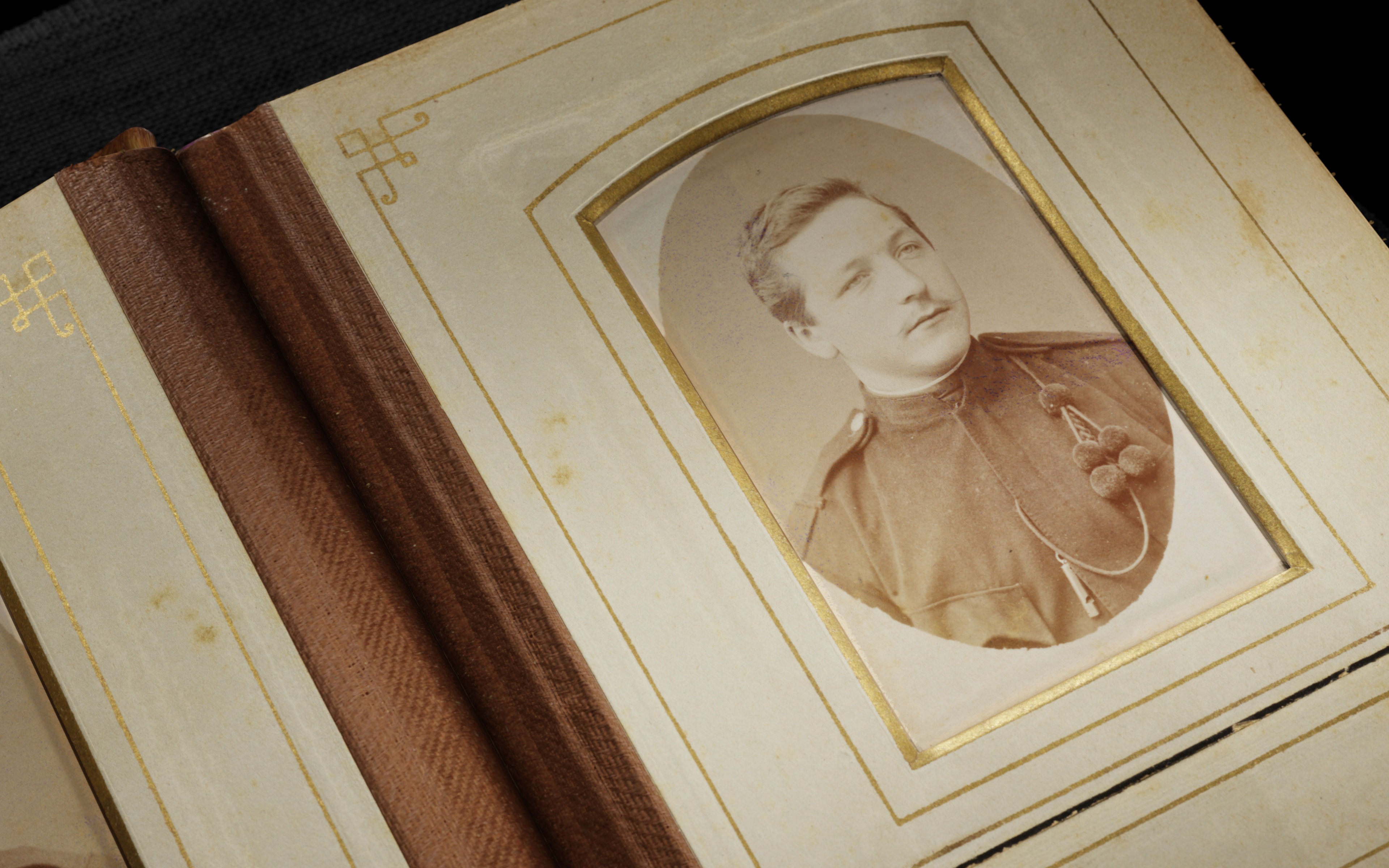
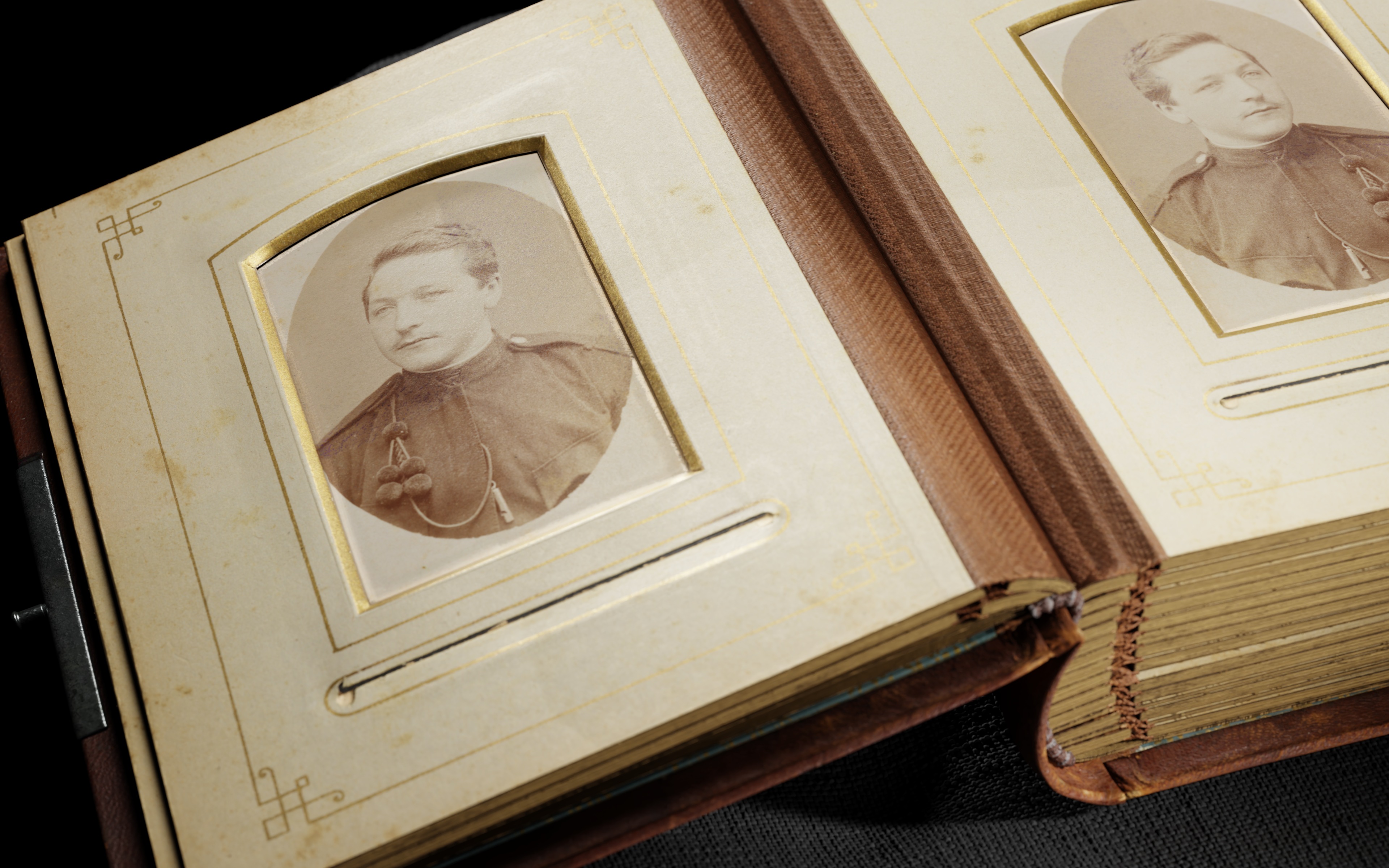
Below is two short videos showcasing these high-quality assets, rendered directly from the 3D models to demonstrate their level of detail and realism.
These videos demonstrate that even the most complex reflection properties were accurately captured by the colormass PBR scanner and faithfully preserved within the colormass 3D CMS.
During the pilot project, we also initiated the development of a solution for uploading and displaying Gaussian splats directly in the browser. The video below demonstrates this feature: while the camera follows a predefined path, the scene is rendered entirely in real time.